

March 1, 2026
Product
How Robotics and AI Are Redefining Infrastructure Asset Reliability

Construction quality determines long-term asset performance. Minor deviations during installation — misalignment, structural inconsistencies, incoplete verification — do not simply “resolve” at commissioning. They become embedded into the asset itself.
What appears as a small defect at installation can evolve into:
- Accelerated mechanical wear
- Reduced energy yield
- Increased maintenance cycles
- Warranty disputes
- Long-term financial underperformance
Construction errors don’t disappear at COD — they compound across the asset lifecycle.
Historically, quality control during infrastructure construction has relied heavily on manual inspection. Field teams conduct spot checks, measurements are recorded in fragmented systems, and deviations are often identified reactively.
As infrastructure projects scale in size and complexity, this model begins to break down.
Modern infrastructure is larger, faster, and more capital-intensive than ever. Utility-scale renewable energy sites span hundreds or thousands of acres. Transportation networks expand across regions. Data centers and energy facilities operate under tighter tolerances and compressed timelines.
Manual inspection models face structural limitations:
- Sampling instead of full-asset verification
- Human variability in measurement and documentation
- Delayed detection of deviations
- Limited traceability across project phases
These constraints introduce systemic risk. Not because teams lack expertise — but because the scale of modern infrastructure exceeds the limits of traditional oversight methods. This is where robotics and AI are changing the equation.

Robotics enable consistent, repeatable, and high-frequency site data capture. AI enables that data to be analyzed at scale — identifying structural deviations, performance anomalies, and compliance gaps in near real time.
Together, they transform quality control from:
Reactive and manual to Continuous and autonomous.
Instead of relying on periodic inspections, infrastructure teams can move toward:
- Full-site verification instead of sampling
- Tracker- or component-level deviation analysis
- Digital twin generation for traceable asset records
- Early detection of installation inconsistencies
The impact is not incremental. It fundamentally shifts when and how risk is identified.
Reliability becomes proactive.
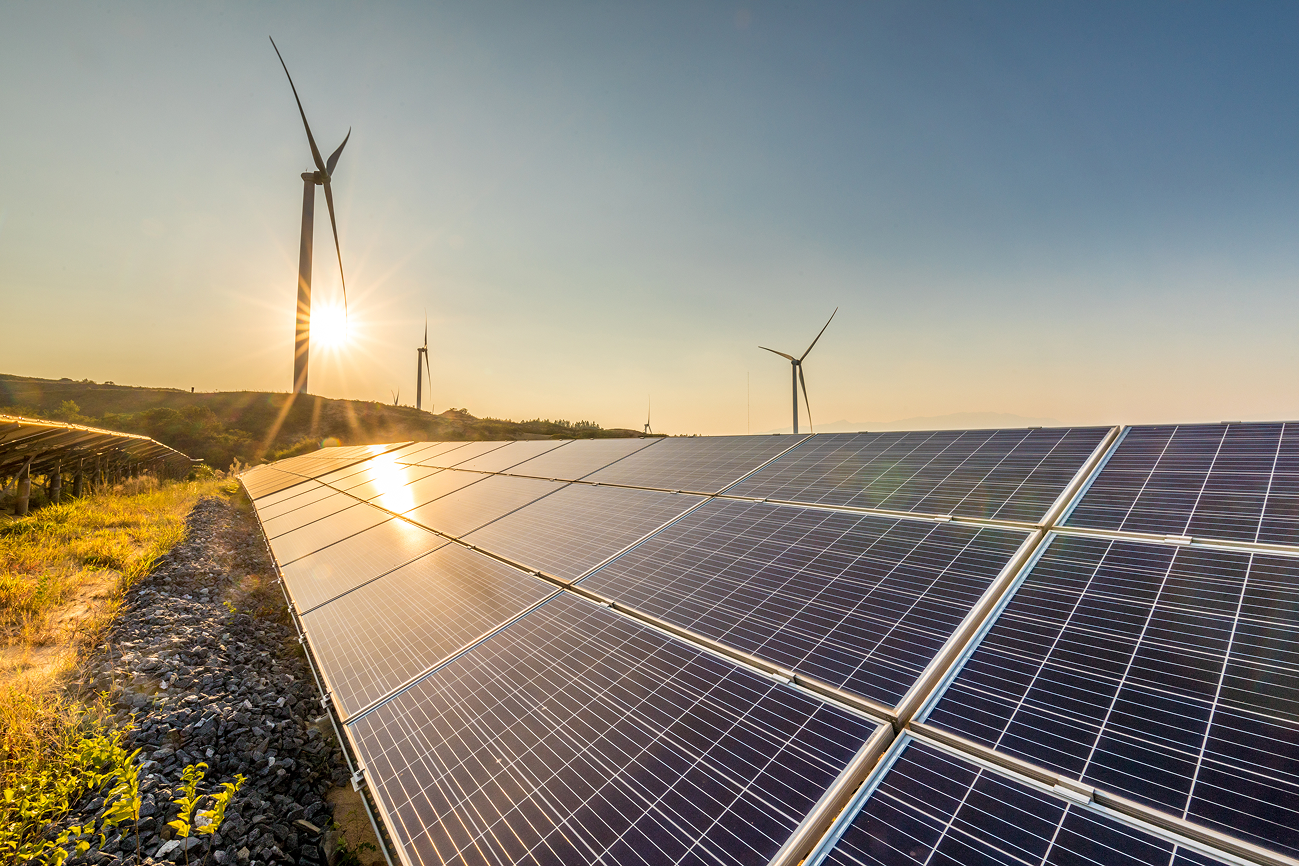
Renewable infrastructure — particularly utility-scale solar — illustrates this transition clearly. Single-axis tracker systems depend on precise installation tolerances. Pile tilt, tracker rotation alignment, structural deformation, and synchronization errors can all influence long-term performance.
When misalignment occurs across thousands of trackers, even small deviations can translate into measurable yield loss over decades.
Traditional inspection methods struggle to verify every component across large sites. Robotics and AI, however, can:
- Capture consistent aerial and structural data
- Compare installed conditions against design models
- Surface deviations early in the construction cycle
- Create traceable digital records for commissioning and beyond
In this model, reliability is no longer a post-COD concern. It becomes embedded during installation.
Across infrastructure sectors, a broader shift is underway:
- From fragmented documentation to integrated digital twins
- From manual measurement to automated anaysis
- From reactive defect correction to early risk mitigation
Autonomous quality control is not about replacing human expertise. It is about augmenting it with consistency, scale, and data integrity.
As infrastructure portfolios grow and capital efficiency becomes more critical, owners and developers are increasingly asking:
- How do we reduce embedded construction risk?
- How do we protect long-term asset performance?
- How do we ensure traceability across decades of operation?
Robotics and AI provide a new answer to those questions.
In the next decade, autonomous inspection and AI-driven construction intelligence are likely to become baseline expectations rather than competitive advantages.
Just as SCADA transformed operations visibility, robotics and AI are transforming construction-phase visibility.
Infrastructure reliability will no longer begin at maintenance.
It will begin at measurement.
And in sectors like renewable energy — where assets are deployed at unprecedented scale — continuous, autonomous quality intelligence may become one of the most important safeguards of long-term performance.

All Rights Reserved.